
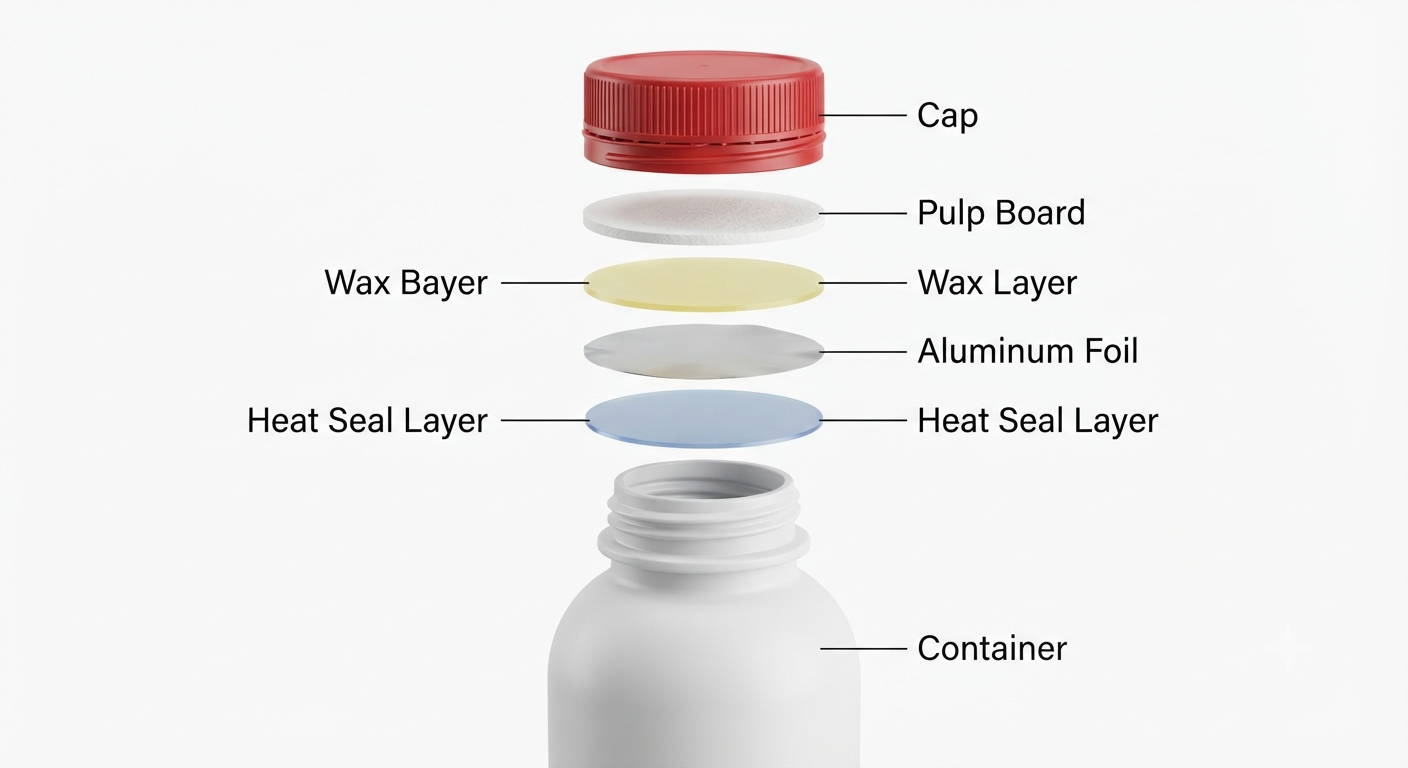
An induction seal provides a tamper-evident, hermetic, and leak-proof foil barrier across bottle openings using electromagnetic induction heating. It preserves product freshness, stops transit leaks, and builds consumer trust.
What Is an Induction Seal?
Packaging is more than just a container—it’s the first line of defense for your product. Whether you’re packaging pharmaceuticals, food products, chemicals, lubricants, cosmetics, or agrochemicals, ensuring product safety and preventing leakage is essential.
An induction seal is a multi-layer sealing material placed inside the cap of a bottle or container. After the cap is applied, the container passes through an induction sealing machine, where high-frequency electromagnetic energy bonds the foil seal hermetically to the container lip.
How Induction Sealing Works (4 Steps)
Cap Application
The multi-layer induction liner is inserted inside the closure and torqued securely onto the filled container opening.
Electromagnetic Heating
The container passes under an induction coil head, generating an electromagnetic field that excites aluminum foil molecules.
Foil Activation & Melting
The aluminum foil heats rapidly in milliseconds, melting the heat-seal polymer coating contacting the bottle lip.
Hermetic Bond Formation
As the rim cools, the polymer forms a permanent, tamper-evident, and hermetically leak-proof seal across the bottle.
Types of Induction Seals
1. One-Piece Induction Seal
Consists of foil laminated to backing foam. Remains permanently bonded to the container for single-use tamper-evident security in chemicals, pharma, and food.
2. Two-Piece Induction Seal
Includes a pulp board backing bonded with wax. When induction heated, the wax melts into the pulp, leaving a resealable liner inside the cap after the foil is peeled.
3. Lift & Peel Induction Seal
Features an ergonomic half-moon pull tab engineered for easy consumer opening in nutraceuticals, food seasonings, and cosmetics without knives or tools.
4. Vented Induction Seal
Integrates an ePTFE breathable membrane into the induction wad, delivering simultaneous tamper-proof security and continuous container pressure equalization.
Frequently Asked Questions
Need a Custom Venting or Sealing Solution?
Contact our team to discuss your packaging requirements and technical specifications.