
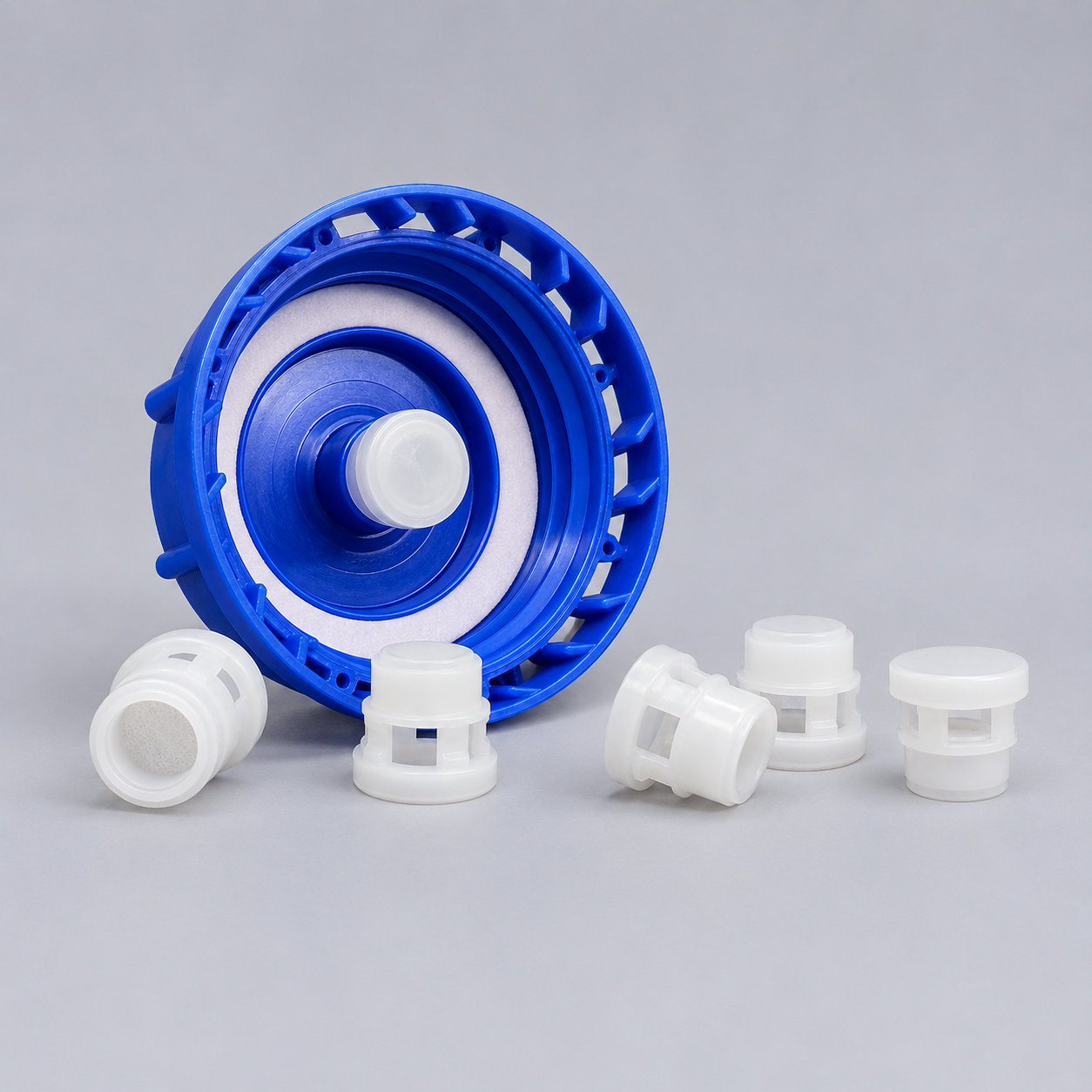
A vented cap is a closure containing a breathable ePTFE membrane that continuously equalizes pressure inside containers while blocking liquid leaks and contaminants. It eliminates container swelling, paneling, and leakage during storage and transport.
What Is a Vented Cap?
If you manufacture or package chemicals, agrochemicals, lubricants, cleaning products, or liquid formulations, you’ve likely seen containers swell, leak, or collapse during warehouse storage or transport. These packaging failures stem from pressure imbalances inside sealed containers.
A vented cap integrates a microporous ePTFE (expanded Polytetrafluoroethylene) membrane that allows air and gases to flow freely in and out of the container while maintaining a 100% leak-proof liquid barrier.
Key Technical Characteristics of ePTFE Vented Closures:
Why Do Containers Swell or Collapse?
Many liquid products naturally generate or consume pressure inside their packaging. These pressure differentials occur due to four primary operational and chemical factors:
Chemical Off-Gassing
Chemicals like hydrogen peroxide, sodium hypochlorite, liquid fertilizers, and pool sanitizers continuously release gases, expanding container sidewalls until deformation or seal rupture occurs.
Temperature Fluctuations
As ambient temperatures rise during shipping or storage, liquids and air expand significantly. Cooler night temperatures can create negative pressure, pulling container walls inward.
Altitude & Air Freight
High-altitude trucking routes and air cargo experience steep atmospheric pressure drops, causing unvented airtight bottles to bulge or blow out their seals.
Hot Filling Contraction
Products filled at elevated temperatures cool down inside the sealed package, creating a vacuum that pulls container walls inward (paneling) unless vented.
How Does a Vented Cap Work?
At the heart of every Zeal Impex vented closure is an advanced ePTFE (expanded polytetrafluoroethylene) membrane. The membrane structure features billions of interconnected micropores per square inch.
These micropores are 700 times larger than air molecules, allowing air and volatile gases to pass through with zero resistance. At the same time, the pores are 20,000 times smaller than a liquid droplet, creating an impenetrable physical barrier against liquids, oils, and surfactants.
Packaging Problems Solved by Vented Caps
Vented caps eliminate container wall deformation, package paneling, and costly shipping leakages:
| Packaging Problem | How Vented Cap Helps |
|---|---|
| Container Swelling & Bulging | Continuously releases excess pressure before sidewall deformation occurs. |
| Bottle Collapse & Paneling | Allows filtered airflow into container to neutralize internal vacuum suction. |
| Liquid Leakage During Transit | Balances internal pressure so liquid is never forced past the neck thread seal. |
| Chemical Off-Gassing Risks | Microporous ePTFE lets volatile gas vent safely without chemical loss. |
| Altitude & Temperature Stress | Maintains package integrity automatically during mountain transit and air freight. |
Standard Cap vs. ePTFE Vented Cap
Compare the functional differences between conventional airtight closures and engineered ePTFE vented closures:
| Feature | Standard Cap | ePTFE Vented Cap |
|---|---|---|
| Airflow Capability | Non-breathable (Airtight) | Continuous Bi-Directional Airflow |
| Pressure Equalization | None (Pressure builds inside) | Automatic Continuous Balancing |
| Swelling & Paneling Risk | High risk of container distortion | Zero Container Distortion |
| Liquid Barrier Security | Prone to leaks under pressure | 100% Hydrophobic & Oleophobic |
| Chemical Resistance | Basic plastics only | Universal Acid, Base & Solvent Resistant |
| Protection Level | Standard Packaging | Advanced Engineered Protection |
Frequently Asked Questions
Need a Custom Venting or Sealing Solution?
Contact our team to discuss your packaging requirements and technical specifications.